Achilles Tendon Solutions That Work!
Most of us take our health for granted and seek help only to “fix” a problem. For runners and people who like to keep active, problems with foot and ankle pain are unthinkable. Unfortunately, the reality is that like so many things related to movement, the ways we use our bodies every day sets us up for continued good health or otherwise.
For people who use their feet all the time, this week’s focus is Achilles tendinitis. Some Danger signs for Achilles Tendon injuries include:
1. Uneven wear in the soles of your shoes
2. Pronation of the feet when standing or walking
3. Tenderness in the area of the Achilles tendon when gently pinched
4. If you sit with your leg straight out propped up on the edge of your desk and flex your foot, where do you feel the movement? (ankle or calf?) You should feel it in your calf.
5. Again, when seated with leg propped on the edge of the desk and you flex your foot, does the inside edge of the foot lead the way and the outside follow?
6. Are your calf muscles tight most of the time?
If you are experiencing most of these symptoms, then your Achilles tendons may be vulnerable to injury. If you spend a lot of time on your feet, your foot wear, the surface you are standing or walking on, and how you move your foot through its normal movement may be contributing to your issue. If you are a runner, the strength of your Achilles is particularly important as uphill running, forefoot running position and speed training place a lot of strain on the Achilles and ankle.
Maintaining healthy movements is the key to preventing Achilles injuries. Tendons work in opposition to other tendons: one flexes, one extends. Dysfunction in the foot, ankle, hip or knee can throw off that dynamic balance in the Achilles tendon.
If you are experiencing heel/Achilles pain, these exercises can help help restore normal foot function and hips/knees/feet balance. Do the exercises once daily until heel pain abates and continue the exercise for an additional week. If you do not notice an improvement within a week, seek professional help from a physiotherapist you trust.
Foot Circles
This exercise encourages the ankle to move through its full range of motion. Even if you have pain in one heel, it is important to complete the exercise on both sides.
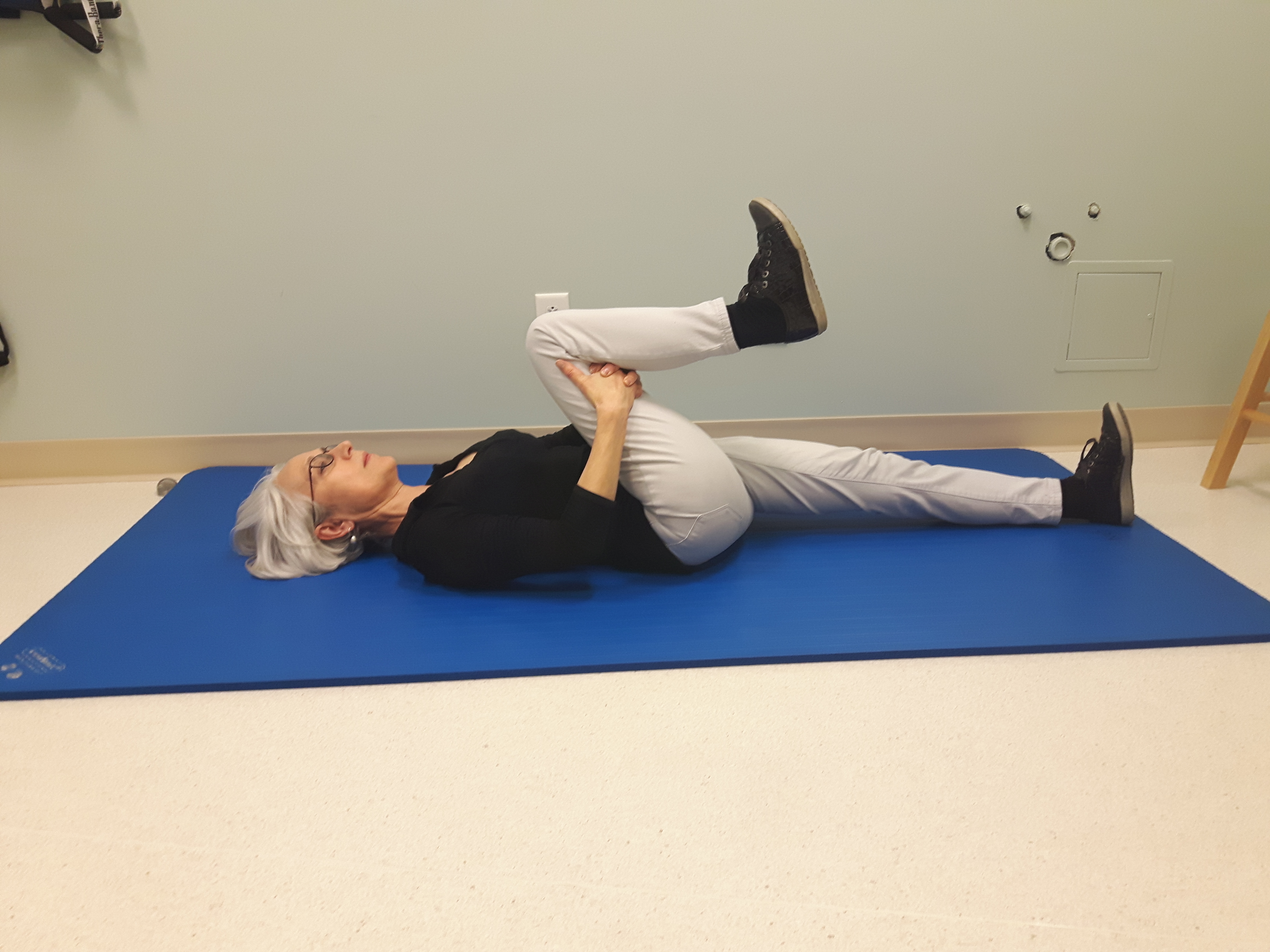
Lie on your back with one leg extended and one leg bent toward your chest. Clasp the bent leg behind the knee and hold. Circle the foot 30 times clockwise then reverse and circle 30 times counter clockwise. Be sure to keep your straight leg extended with the toes flexed towards the ceiling. Change sides and repeat. Be sure the bent knee is held in place, the movement needs to come from the ankle, not the knee.
Static Back
We often use this exercise for low-back pain. Its purpose here is to settle the hips to the floor and to release the muscles in the hip that interfere with the normal gait-pattern of the hip and ankle.
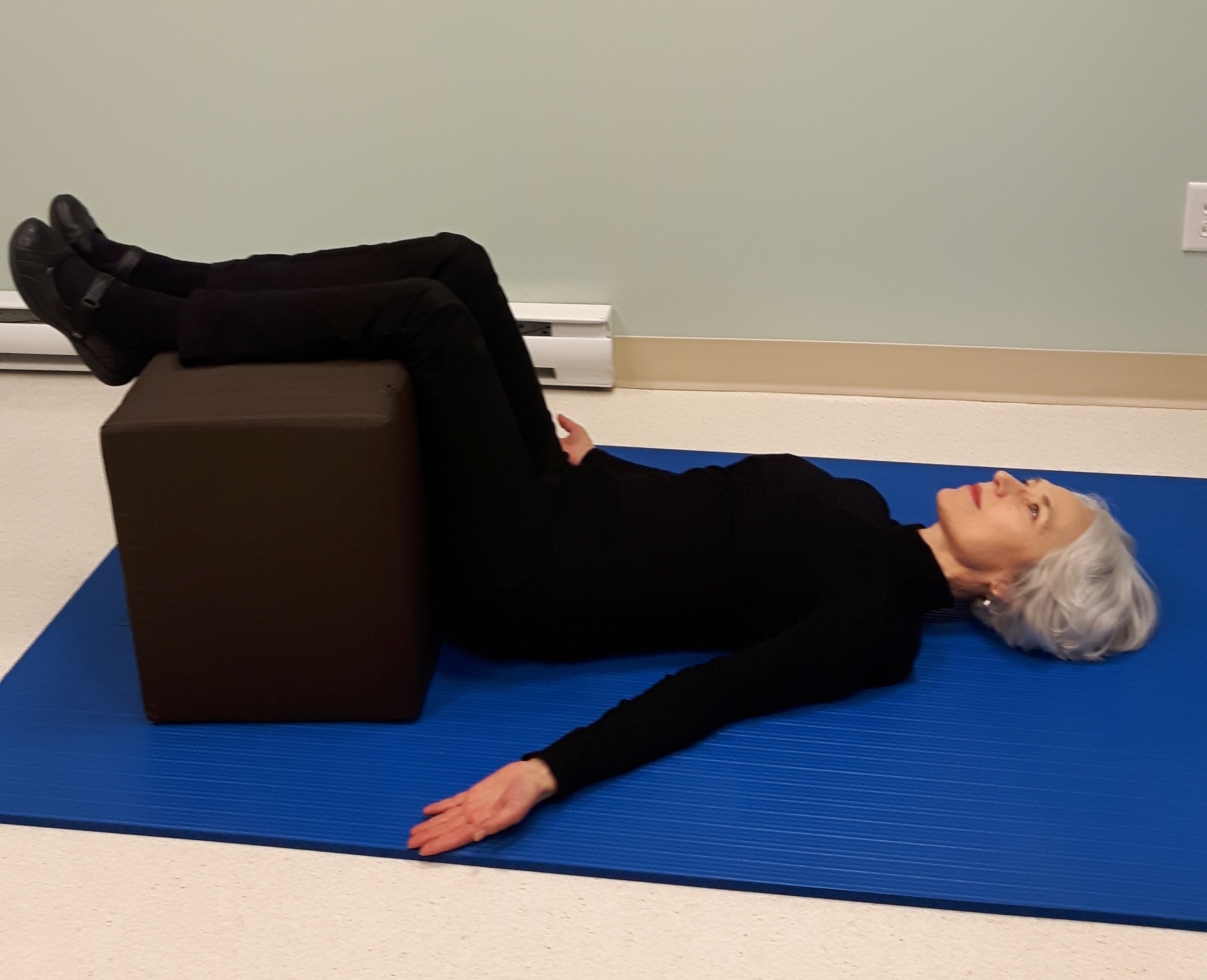
Lie on your back on the back with your feet and calves elevated on a block (a chair or coffee table might work too). The back of the knees are tight to the edge of the block to support the legs so the muscles can relax. Arms are out at a 45 degree angle.
Lying in Static Back minimizes stress throughout the spine, pelvis and hips. It allows muscle spasm to relax, and it usually eases pain.
Static Back position is a highly active position. Hold the position for 10 minutes each day for foot pain. ( 30 minutes for back pain)
Remember to breathe. This position aligns your spine and spreads weight evenly through your body making room for full belly breathing. As you inhale, your belly should expand, when you exhale, your belly should collapse.
Static Wall
This exercise is intended to engage the anterior muscles of the thighs and lower legs. It gently stretches the hamstrings and reinforces the connection between the legs, hips and feet.
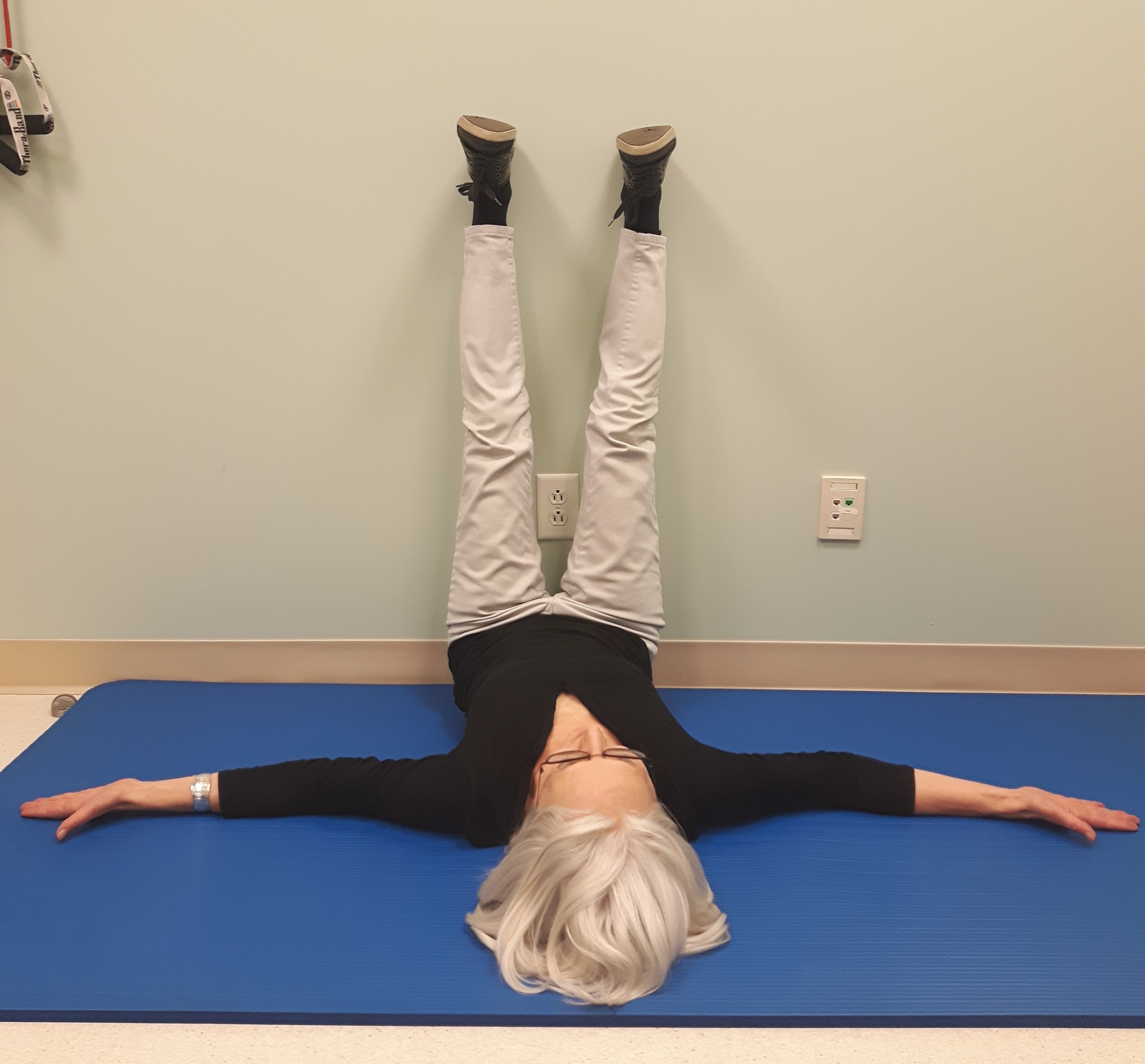
Lie on your back with your hips as close to the wall as possible. Place your legs straight up against the wall with your feet hip distance apart. Your buttocks and hamstrings need to be as close as possible to the wall. Focus on relaxing the upper body. Hold for 3-5 minutes. Breathe deeply allowing your chest to expand on inhalation and fall on exhalation. Relax. Do this exercise daily until pain abates; then continue for an additional week.
Summary: We recommend that you do these exercises every day for about a week. The combination is intended to remind the ankle of its full range of motion, relax the hips and stretch out the backs of the legs.
If you have not noticed an improvement in your pain and the movement of your ankle, there may be something more going on. Every body is different! You may need to book an appointment with your physiotherapist to check for healthy movements and range of motion.
Sometimes inflammation in the tendon itself is the barrier to healing. When inflammation is present or when healing is delayed, Bioflex laser therapy is our go to for its accelerated healing benefits. The image below shows an Achilles Tendon partial tear injury pre/and post laser therapy. 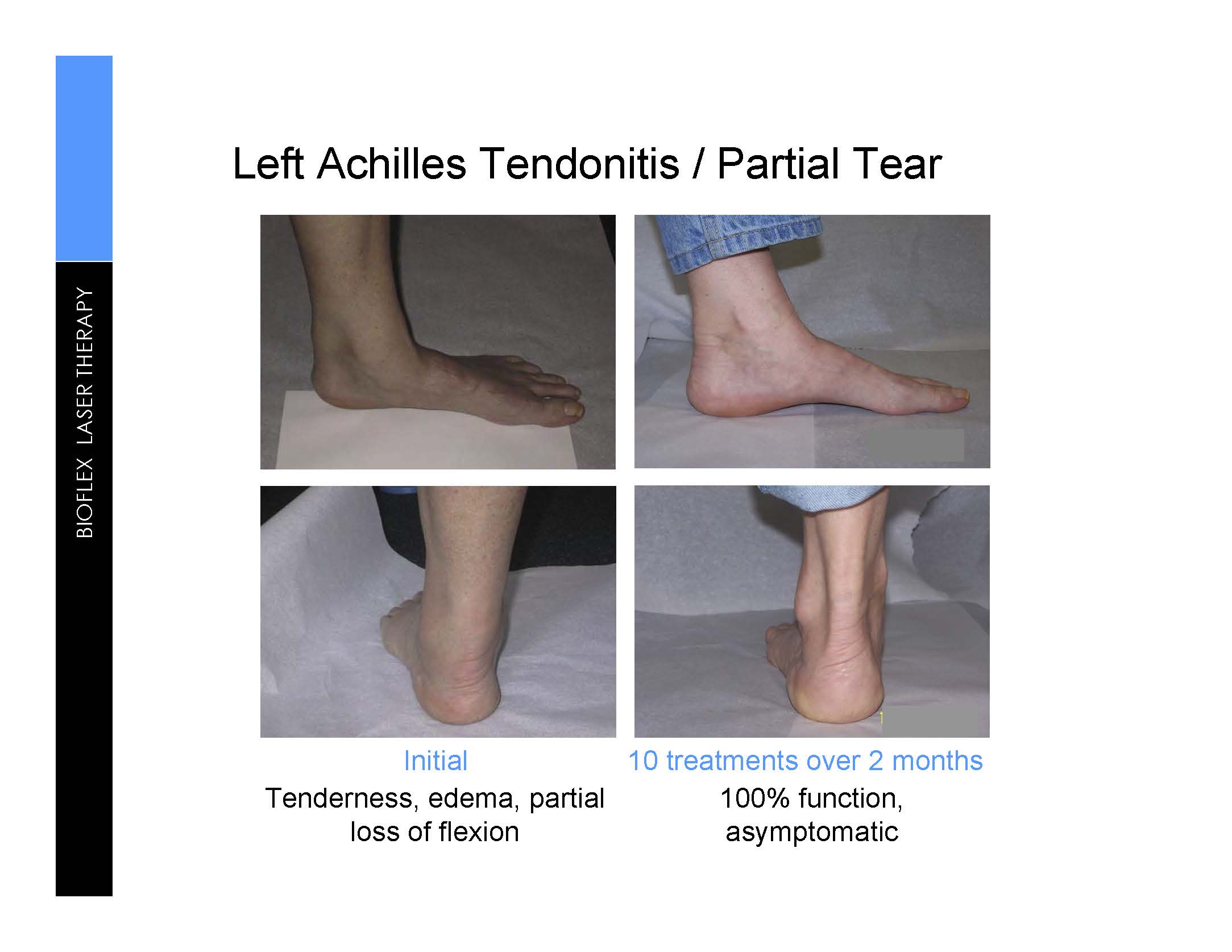
If you have questions, reach out, our team of professionals has the skills to help you.
Ready to get relief from your pain and get back to living your life?
Schedule a FREE 15 minute consult with one of our practitioners.